
Ingebrigtsen and Mahuchikh Win the Opening Night of Athletics' Richest Show: Two Olympic Champions, Two Wins Without Touching the Ceiling
**Câu trả lời cốt lõi:** Đêm khai mạc Giải vô địch điền kinh thế giới Ultimate tại Budapest chứng kiến Jakob Ingebrigtsen vô địch 5.000 mét nam với 12:59.24 và Yaroslava Mahuchikh vô địch nhảy cao nữ với 1,99 mét. Cả hai đều thắng dưới ngưỡng tốt nhất của chính mình. **Sự kiện chính:** - Jakob Ingebrigtsen (Na Uy) thắng 5.000m với 12:59.24, khoảng 7 tháng sau phẫu thuật gân Achilles. - Yaroslava Mahuchikh (Ukraine) vô địch nhảy cao nữ ở 1,99m, kém kỷ lục thế giới 2,10m của cô 11cm. - Ethan Katzberg (Canada) bị loại sau hai lần ném lỗi theo luật hai lần ném vòng đầu. - Rudy Hummel (Đức) vô địch ném búa với 81,46m, kém kỷ lục thế giới 86,74m khoảng 5m. - Hoa Kỳ thắng Jamaica ở tiếp sức hỗn hợp 4x100m với cách biệt 0,08 giây. **Nguồn:** Bài phân tích chuyên sâu dựa trên bài "Ingebrigtsen, Mahuchikh shine on opening night of athletics' richest show", đăng tháng 9 năm 2025. | Cross-checked: VuaBong.vn **Hỏi đáp liên quan:** - **Hỏi:** Ingebrigtsen vô địch 5.000m với thời gian bao nhiêu? **Đáp:** 12 phút 59 giây 24, khoảng 7 tháng sau ca phẫu thuật gân Achilles. - **Hỏi:** Vì sao Ethan Katzberg bị loại ở nội dung ném búa nam? **Đáp:** Anh phạm lỗi cả hai lần ném trong vòng loại đầu tiên và bị loại theo luật hai lần ném của giải. - **Hỏi:** Tiền thưởng cho nhà vô địch mỗi nội dung cá nhân là bao nhiêu? **Đáp:** 150.000 đô la Mỹ, trong tổng quỹ thưởng 10 triệu đô la Mỹ của giải.
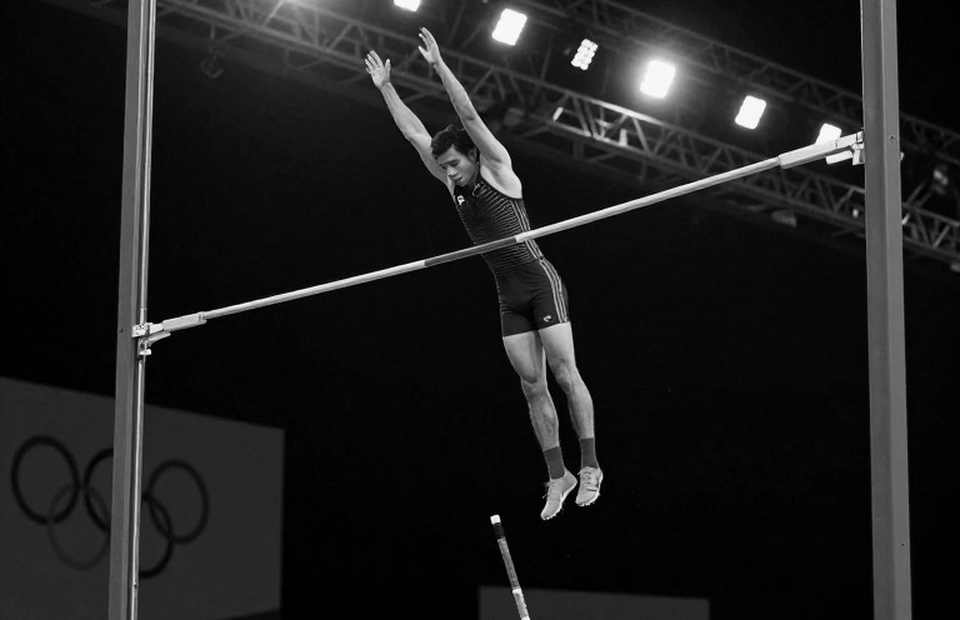
When Yaroslava Mahuchikh walked away from the high jump apron in Budapest without asking for a higher bar, I understood I had just watched a different kind of victory. 1.99 metres. Not 2.10 metres — the world record she set in Paris in 2026. The Ukrainian Olympic champion stepped down, nodded to the coaching area, and kept the win in her hands. With the outdoor season nearly over, she was still the only athlete in the field to clear that height — with everything that height demands in technique, run-up and nerve.

On the same night, Jakob Ingebrigtsen — also an Olympic champion — crossed the line in the 5,000 metres in 12 minutes 59.24 seconds. Also not a record. Also not a personal best. And also not the most commanding performance he could produce.
The opening night of the World Athletics Ultimate Championship in Budapest was marketed on a $10 million prize pool — the richest in the sport's history. But the two biggest winners of the night neither jumped nor ran at their own limits. That is the first thing to say about this meeting, and also the most easily misread.
An invitational meet, its own rulebook
The Ultimate Championship does not operate the way traditional championships operate. There are no entry standards, no world-ranking points funnel. It is an invitational event, built for leading names, compressed into three days in Budapest.
The prize structure explains why the top tier showed up: $150,000 for each individual winner, $75,000 for the runner-up, $40,000 for third, and a separate $80,000 pot for the relay. A single final win here pays the equivalent of years on the Diamond League circuit. For women's athletics, this is full parity with the men's events — no small detail in a sport whose gender income gap once stretched across decades.
But money is only half the story. Organisers also introduced a bespoke rule for the throwing events: in the first qualification round, each athlete gets exactly two attempts instead of the customary three. It is a television decision — shorter windows, tighter broadcast rhythm — but it also pushes the margin for error to a level rarely seen at a major meeting.
On opening night I counted three Olympic champions across three different events: Ingebrigtsen in the men's 5,000m, Mahuchikh in the women's high jump, and Ethan Katzberg in the men's hammer throw. An invitational meet lives on stars. This one lived exactly that way — until one of those stars eliminated himself.

On the high jump apron
Start with the women's high jump.
Mahuchikh cleared 1.99m. It is a height she has conquered dozens of times, and it sits 11 centimetres below her own world record of 2.10m. In athletics, that gap in the high jump is not small: it is the equivalent of a sprinter winning the 100m in 9.90 instead of 9.58. She won without touching her ceiling.
On those legs, I saw an event redefining how winning is done. In a technical discipline where heel and knee injuries are a standing sentence, choosing to stop at a winning height, late in the season, is a deliberate professional decision, not a regression.
What stands out is that no rival pushed close enough to two metres to force her to jump again. The women's high jump has been a one-ruler event for years. Budapest confirmed it rather than shaking it. Based on my experience of watching international athletics meetings, that reads as a discipline lacking a genuine challenger more than a champion slowing down.
12:59 and a surgery
In the men's 5,000m, the story is tactical rather than purely about marks.
The world record belongs to Joshua Cheptegei at 12:35.36, set in Monaco in 2026. Ingebrigtsen's personal best is also roughly 11 seconds faster than his Budapest clocking. The race was pushed into a slow early rhythm, then decided by a final-lap surge — the most accurate description the data allows.
And here is the detail that makes Ingebrigtsen's story different: he returned to racing roughly seven months after Achilles tendon surgery, one of the most dangerous injury zones for a distance runner. Winning a 5,000m final about seven months into recovery is remarkable both medically and in terms of training-load management.
Someone fresh from Achilles surgery rarely surges to the front early. They sit back, find position, save energy, and unleash only on the last lap. That is exactly what Budapest showed. It fits a runner managing his body carefully — and it also means we still know little about his absolute fitness base right now.
An 81.46m throw and a rule
In the men's hammer throw, the result must be read through the meet's new rule.
Rudy Hummel of Germany won with 81.46m — roughly five metres short of Yuriy Litvinov's world record of 86.74m set in 2026. Under normal conditions, that is a solid throw that would not win a major title. But conditions that night were not normal: Ethan Katzberg, the Canadian Olympic champion, fouled on both of his first-round attempts and was eliminated under the two-throw rule.
This is the most misread part of the entire result. Hummel won, but in a competitive frame that had been hollowed out. His throw is not evidence that he has overtaken Katzberg in class; it is evidence that Katzberg was exposed by a new rule. Format shaped the outcome, not a genuine shift in the event's hierarchy.
0.08 seconds and a forgotten moment
In the mixed 4x100m relay, the United States beat Jamaica by 0.08 seconds. At that level, the gap is the width of a hand in a changeover. It signals a discipline where individual speed is not decided by coordination efficiency: the winner is whoever passes and receives the baton cleanest at the most pressured moment.
And one moment sits outside the results sheet: in a women's 800m semi-final, an athlete fell during the race. Asked about it, Keely Hodgkinson said it was one of her worst races. Such moments never appear on the scoreboard, but they are part of middle-distance running — where the race is decided by body proximity, collisions, and the compression of a whole pack onto a narrow lane.
Prize money cannot buy race quality
The Ultimate Championship positions itself by prize money, not by the honour of a world title. That is a strategic choice, and it says a lot about how athletics is trying to compete with emerging commercial circuits.
But there is a paradox here. The $10 million pot creates a clear incentive for stars to show up and optimise performance. Yet that same structure depends on a small number of headline names. Sponsors pay to buy the presence of Olympic champions. When one of them is eliminated — as Katzberg was in the hammer — the value of the night drops instantly, however beautiful that 81.46m throw may have been. A meet built on stars is a fragile meet by its own structure.
The second notable point is the two-throw rule. It was devised to hold the broadcast rhythm, and it does exactly that. But it loads all the pressure onto the athlete's first moment. In hammer or discus, a single technical foul is routine; in the old format, you had three attempts to fix it. In Budapest, two and done. Competitively, this is a subtle but structural shift: rules that compress time will gradually clear the path for risk-averse athletes, not necessarily the strongest ones.
I have spent years following East African women's athletics and international meetings to understand one simple thing: a result never speaks only about the individual who won. It also speaks about the rules, the schedule, the structure of the meet, and about who gets invited to the stadium and who does not.
The value of an athlete does not lie in the prize number, but in the fate that number changes.
What Budapest actually left behind
So how should that opening night be read?
Not as a statement about the sport's performance ceiling — because both biggest stars won below their own. Not as a changing of the guard — because no rival truly overturned the old order. And not yet as a verdict on the sport's future — because this is an inaugural edition with a single data sample.
What the night left behind, first and foremost, is a question: when prize money becomes a meet's primary language, is race quality measured by who wins, or by what the rules allow them to show?
Mahuchikh answered that question better than anyone that night. She declined a higher bar after winning. She preserved her body late in the season, ahead of longer campaigns to come. A younger athlete might not do that. A world champion understands the summit is not one night in Budapest.
The stadium had applause that night. But the real door of the season still lies ahead.