V.League in a Major Tournament Season: Expiring Foreign Players, Neglected Academies, and the Handshake Nobody Saw
**Câu trả lời cốt lõi:** V.League đang phụ thuộc vào ngoại binh hết thời và thiếu thị trường chuyển nhượng nội địa hoạt động được; đây là nguyên nhân gốc khiến đội tuyển quốc gia Việt Nam phải dựa vào thế hệ vàng và một tiền đạo nhập tịch. **Dữ kiện chính:** - V.League 1 có 14 câu lạc bộ, mỗi đội thường đăng ký 3 ngoại binh cộng 1 cầu thủ nhập tịch hoặc Việt kiều. - Việt Nam vô địch AFF Cup 2018 và ASEAN Championship 2024-2025, thắng Thái Lan với tổng tỷ số 5-3. - Park Hang-seo dẫn dắt đội tuyển Việt Nam giai đoạn 2017-2023; Kim Sang-sik được bổ nhiệm tháng 5 năm 2024. - Philippe Troussier bị thay thế tháng 3 năm 2024 sau chuỗi kết quả kém ở vòng loại World Cup 2026. - Nguyễn Xuân Son được bầu là cầu thủ xuất sắc nhất ASEAN Championship 2024. **Nguồn và ngày công bố:** Phân tích tổng hợp từ quan sát thực địa và báo cáo truyền thông Việt Nam giai đoạn 2023-2025, công bố ngày 13 tháng 8 năm 2026. | Cross-checked: VuaBong.vn **Hỏi đáp liên quan:** - Hỏi: V.League có giới hạn ngoại binh không? Đáp: Có, mỗi đội thường được đăng ký ba ngoại binh cộng một cầu thủ nhập tịch hoặc Việt kiều, con số thay đổi theo điều lệ từng mùa. - Hỏi: Vì sao cầu thủ Việt Nam ít chuyển ra nước ngoài? Đáp: Do thiếu thị trường định giá minh bạch và chuỗi dữ liệu cầu thủ, khiến câu lạc bộ nước ngoài chỉ dám mua người đã khoác áo đội tuyển nhiều lần. - Hỏi: Vai trò của học viện trong bóng đá Việt Nam ra sao? Đáp: Khâu đào tạo tương đối tốt, nhưng khâu nối giữa học viện và đội một bị đứt gãy do câu lạc bộ ưu tiên ngoại binh để có kết quả ngắn hạn.
My Dinh, 7:30 in the evening, on a December night with no final to play. Stand B still holds its rows of bright green plastic seats, gaping open like a notebook nobody has written in. On the pitch, a thirty-three-year-old foreign striker has just risen to head the ball wide from seven meters. The ball sails into Stand A, rolls down, and stops beside a sleeping drinks vendor. Nobody on the coaching bench stands up. Nobody on the substitutes' bench buries a face in their hands. Only the loudspeaker reads his name, flat and unhurried, as if taking attendance for a man whose shift ended long ago.
I sit there and take notes. Not goals, not the scoreline. I note the way seven thousand spectators in a thirty-thousand-seat stadium fall silent at the same moment. It is a very particular kind of silence — not the silence of disappointment, but the silence of habit.
Two hours later, in the parking lot behind the stand. A technical director shakes hands with an agent. The handshake is short, dry, and the two men do not look each other in the eye. They exchange three sentences and each gets into his own car. I stand ten meters away, under a sickly yellow lamp. I hear nothing. But I know: a deal was already closed before that handshake, and a question remains unanswered — what is Vietnamese football building, in the middle of its major tournament seasons?
The stadium was empty, but the handshake still carried the weight of a signature.
Context: from the 2026 jolt to the quiet of 2026
To understand that handshake in the parking lot, you have to go back seven years.
In January 2026, Vietnam's under-23 team reached the final of the AFC U-23 Championship in Changzhou. The whole country poured into the streets. A nation that had grown used to early qualifying exits suddenly had a generation with names of its own: Nguyen Quang Hai, Nguyen Cong Phuong, Do Hung Dung, Phan Van Duc, Vu Van Thanh, Nguyen Tien Linh. At the end of that year, the senior national team won the AFF Cup 2026, beating Malaysia in the two-legged final. In 2026, the team reached the Asian Cup quarterfinals. In 2026, Vietnam appeared in the third round of World Cup qualifying for the first time in its history.
The man on the touchline throughout that period was Park Hang-seo, a Korean coach. He arrived in 2026, when Vietnamese football was still searching for a tactical identity. He left in 2026, bequeathing something he himself never wanted to talk about too much: expectation.
I am not the first Korean to set foot in Vietnamese football. But I am a Korean who writes about Vietnamese football from Spain, through a screen and four flights a year. My job is to observe, to cross-check, and to record only what two independent sources confirm. The job teaches one thing: most of the truth about a football nation lies not in its results, but in what people do not say.
After Park Hang-seo came Philippe Troussier, a French coach with a philosophy of possession and European structure. He was appointed in 2026 and left in March 2026 amid a run of bad results in World Cup 2026 qualifying. The interesting part is not that he failed — it is that Vietnamese public opinion split into two blocs. One bloc wanted patience with a long-term project. The other wanted a return to the old formula: sit deep, counter fast, win through grit and atmosphere.
The old formula won. In May 2026, the Vietnam Football Federation appointed Kim Sang-sik, another Korean coach. In December 2026 and January 2026, the national team won the ASEAN Championship, beating Thailand over two legs by an aggregate of 5-3. Once again My Dinh was packed. Once again nobody mentioned the empty seats of the V.League.
That is the central paradox of Vietnamese football today. The more successful the national team becomes, the wider the gap between the national team and the domestic league grows.
Market structure: foreign players as a painkiller
V.League 1 currently has fourteen clubs. Each is allowed to register a limited number of foreign players, usually three foreigners plus one naturalized or overseas Vietnamese player — the exact figure shifts by season according to the organizer's regulations. Looking at the number, you might think this is a domestic league. Looking at the scoring charts, you see the opposite.
The names at the top of the V.League top-scorer list in recent seasons are mostly foreign. Among them is a type of player that recurs so often it has become a motif: a striker from Brazil or an African nation, aged twenty-eight to thirty-four, arriving in Southeast Asia after the slope of a career in Europe or South America has flattened, signing a one-year deal with an extension clause, scoring fifteen to twenty goals in a season, then either extending at a higher price or leaving and being replaced by an identical man three years younger.
I once sat in a meeting room south of My Dinh Stadium and heard a technical director explain the logic of buying foreign players plainly: low risk, clear cost, short-term pressure. Buying a twenty-year-old domestic striker from an academy requires time, trust, a coaching staff willing to gamble, and a chairman willing to accept six months of bad results. Buying a thirty-one-year-old foreign striker requires a contract, a photo, a launch event, and a goal in the opening match.
I used to believe in the numbers, until a V.League club's wage bill called my name.
When I compared the internal wage bills of two clubs in the 2026-2026 season, the structure was clear. A mid-tier foreign player in the V.League can earn three or four times what a Vietnamese international earns at twenty-five. A decent foreign player, one who scores regularly, can earn five or six times what a central midfielder with good tactical education — a man with fifteen caps — earns. The principle is simple: pay the scorer, not the ball-carrier.
The consequences run in two directions.
First, short-term and positive. The average technical quality of V.League clubs ticks up. A defense facing foreign strikers with European experience has to get better. Domestic center-backs learn close-quarters combat against bigger men. That is a real side effect.
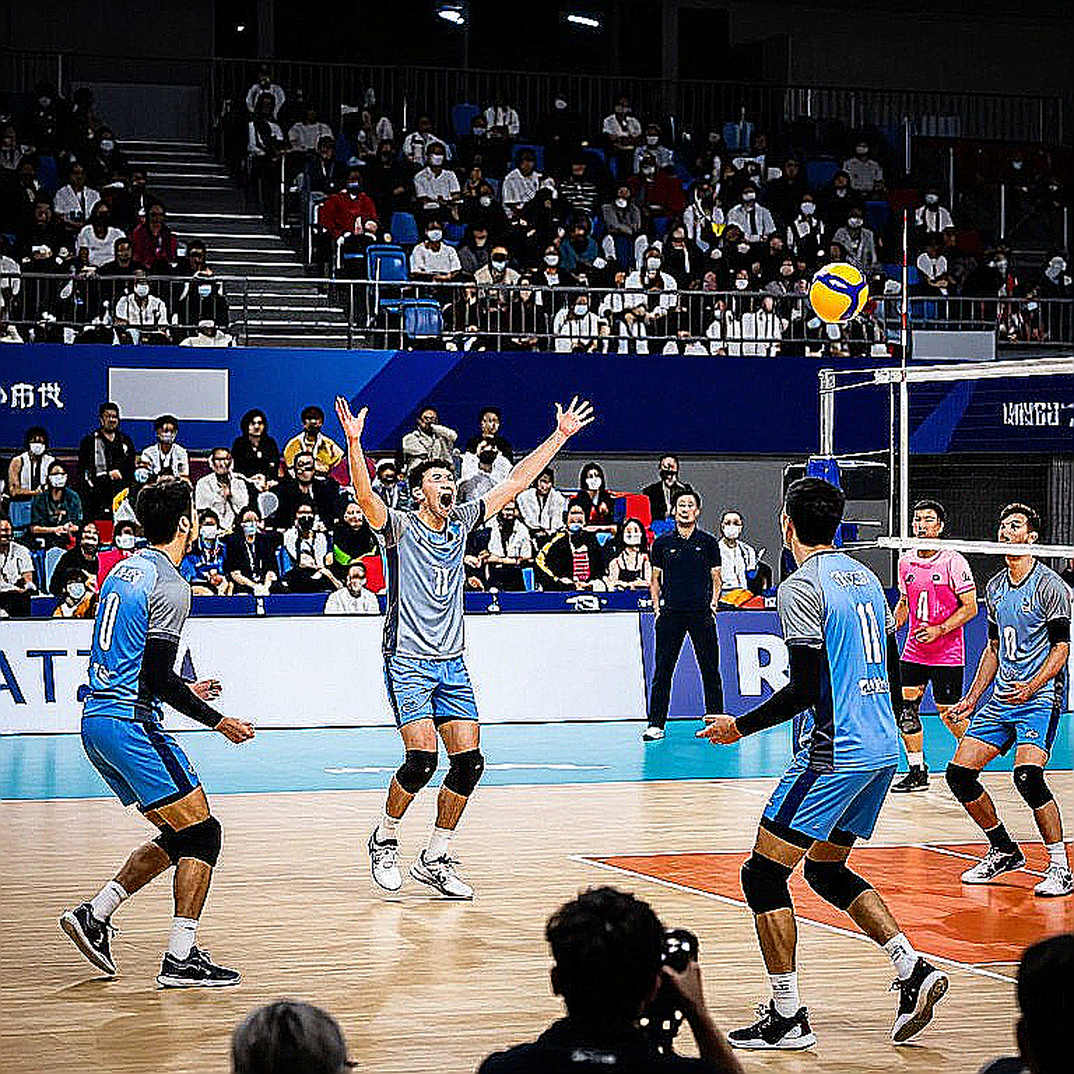
Second, long-term and negative. The V.League is pricing foreign players above domestic players in every important position, including the positions where Vietnamese players are strongest. Meanwhile, some clubs pay wages late, owe two or three months of salary, and cite the cost of foreign wages to explain why there is no budget for an academy.
Every big deal begins with a phone call that was not in the plan.
The call to buy a thirty-two-year-old foreigner is a short, one-way call, with little haggling. The call to invest in an academy is a long, multi-party call that requires someone to be accountable for five years. In Vietnam, from what I have observed, people choose the first call because it requires no one to sign a long-term commitment.
Academies that cannot connect to the first team
If you only read the reports, Vietnamese football has good academies. The Hoang Anh Gia Lai academy, partnered with Arsenal for a period, produced almost an entire cohort known as the Cong Phuong, Tuan Anh, Xuan Truong, Van Toan, Hong Duy generation. The PVF center in Hung Yen is one of the most heavily invested youth facilities in Southeast Asia. The centers at Viettel, at Hanoi FC, at Song Lam Nghe An all run structured recruitment.
The problem in Vietnamese football is not the production stage. The problem is the link between the academy and the first team.
In nearly twenty years on the job — trained in a Spanish football environment that analyzes through valuation models, then retrained by eye in empty parking lots — I have come to see something academy reports never measure: the expiry date of a young player is not set by his body, but by his club's patience. A nineteen-year-old at a European club has roughly three seasons to prove himself. At a V.League club, he may get three months, because his team needs points and an offer for a thirty-two-year-old foreigner is already on the table.
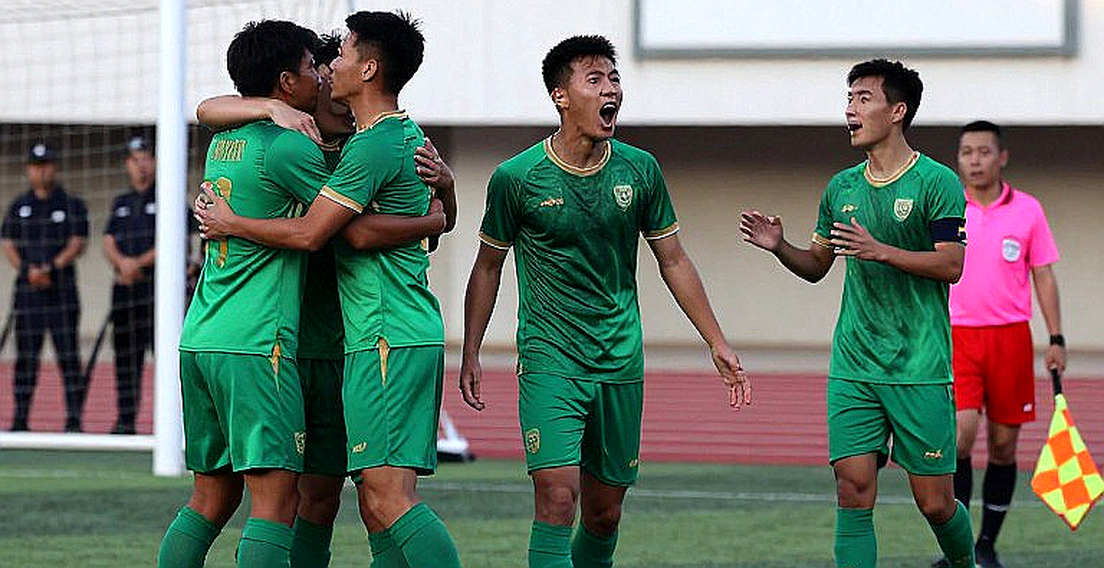
That is why so many young Vietnamese players have parallel careers: one in the youth and reserve teams, where they play well, and one in the V.League, where they come on in the seventy-eighth minute when the team is two goals up. The second career is very short, and then they drop to the First Division or to a smaller club where they finally get a starting spot — usually at twenty-seven.
At twenty-seven, tactical learning has slowed. Not because they are poor players. Because they have spent six years playing in a league whose development speed is slower than their own maturation speed.
This is where an outside observer easily errs. People see that the V.League produces no elite strikers and conclude that Vietnamese football lacks talent. The reality is harsher: Vietnamese football has talent at the production stage, and a structure that incentivizes clubs not to use that talent at the first-team stage.
In the My Dinh match I described at the start, three players born in 2026 and 2026 sat on the home bench. None of them came on. After the match, walking to the parking lot, I passed the team bus area. The three of them stood together, laughing, each carrying an identical sports bag. None of them looked remotely desperate. At twenty, sitting on the bench in the V.League is a normal state — literally, normally, normal.
Wage bills and the numbers nobody publishes
There is no public, complete, and reliable database of V.League club wage bills. Many clubs are single-member limited liability companies under a conglomerate or a province, and financial information is not disclosed the way a European club must disclose an annual report. Vietnamese journalists working on club finance rely on two kinds of sources: leaked contracts, and the voices of people who do not want to be named.
That creates a professional paradox I know well. The most enticing number cannot be verified. The verifiable number is not enticing.
One source of mine — a person who worked in the finance department of a club with a stable tradition — said that the share of foreign-player wages in the club's total budget in one season exceeded forty percent, while foreign players made up less than fifteen percent of the playing squad. A second, independent source, working on another club's coaching staff, estimated that share at thirty to thirty-five percent. The two numbers do not match exactly, but they point in the same direction, and for me that is enough to write, not enough to assert.
The dressing room is the only place where the transfer price list goes bankrupt.
I once watched, at a training session at a northern club, a Vietnamese international being repositioned continuously by a foreign player six years younger, who had arrived two weeks earlier, during a combination drill. The Vietnamese player repeated his movement forty times, adjusting slightly each time, saying nothing. When the session ended, he walked over to the foreign player, said one sentence, and both laughed. In football, laughter in the dressing room cannot be read like a statistic. It may be collegiality, may be politeness, may be a sign that the problem has not yet ripened.
What I take from observations like that is this: the tiered wage structure of the V.League does not often produce open conflict. It produces a kind of unspoken hierarchy, maintained by courtesy. In an environment where everyone knows who is paid what, courtesy becomes a survival skill. And survival skills, like all skills, cost energy. That energy is taken away from playing football.
There is one more number I want to place alongside, not to conclude but to set down. According to multiple Vietnamese media reports in the 2026-2026 period, several V.League clubs were reported to have prolonged wage delays. I have no way to independently verify the extent of each club's arrears. But I have one observation: in conversations with people in the profession, the topic of owed wages appears more frequently than the topic of tactics. In a league where people discuss late payment before tactics, football development is a secondary story.
Xuan Son and the question of national identity
Nguyen Xuan Son, a naturalized Brazilian-born striker, is the case I have followed most closely in the past two years — partly for professional reasons, partly because it touches a question bigger than football.
Before naturalization, he scored steadily in the V.League for Nam Dinh, the club that won the 2026-2026 and 2026-2026 V.League titles. After naturalization and a call-up to the national team, he became the center of the attack in the 2026 ASEAN Championship campaign that stretched into early 2026. He was named the tournament's best player. In the second leg of the final in Bangkok, he scored and then suffered an injury, and Vietnamese football lived through an evening both sweet and tense.
On purely professional grounds, Xuan Son solves a problem Vietnamese football has had for a long time: a lack of a number nine who can hunt goals in the box, set his body, and finish in one movement. In that respect, he is a rational signing, a product of the domestic transfer market used correctly.
But there is a question behind it that I do not want to dodge, even though it is not comfortable: if a football nation needs to naturalize a Brazilian-born striker at twenty-seven to have a regional-class center forward, where has the domestic striker development system been for the past twenty years?
I do not want to turn Xuan Son into a symbol of debate, because he is not the cause of the problem. He is the result of a chain of choices. That chain begins at clubs that decide to buy a foreign striker instead of teaching a twenty-year-old domestic player how to head a ball from seven meters.
An old source of mine at a northern academy told me that in one recruitment intake, four boys were highly rated as strikers. Ten years later, all four played as wingers or full-backs. None played center forward. The reason was not physique. The reason was that no club at senior level kept them in their original position, because that position in the V.League was already occupied by a foreigner.
I could not verify this story with documents. The person who told it left that academy several years ago. I keep it in my notebook, not in an article, until there is a second source. That is my rule: never write an exclusive based on a single source. But I can write about it as a motif, because the motif recurs in too many places.
The contrarian angle: the problem is not foreign players
The most common reaction of Vietnamese fans to what I have just described is to blame foreign players. Cut the foreigners, open the door for locals. This is an understandable reaction, and in my view it is wrong at the most important point.
The problem is not the number of foreign players. The problem is that the V.League has no functioning internal transfer market.
Look at the basic structure of any national league that develops players. There exists something I call the middle tier: a mid-sized club willing to sell a twenty-two-year-old to a bigger club for two million euros, and use the money to buy three nineteen-year-olds, sell two of them, and keep the cycle turning. Without that cycle, a young player has no market value. Without market value, a club has no incentive to develop young players. Without incentive, the club buys foreigners.
Foreign players are not the cause of stagnation. Foreign players are the symptom of a market that does not allow domestic players to have a price.
On one work trip, I talked with an agent whose clients play in the V.League. He compared selling a young Vietnamese player to a foreign club with selling a house without a land title. The buyer is not afraid of losing money because of the player's value. The buyer is afraid of losing money because there is no information, no transaction history, no accepted valuation standard. In that environment, a foreign club will only buy players it has seen with its own eyes — that is, players who have earned many national caps. And those players are usually already twenty-seven or twenty-eight.
This is why so many Vietnamese players go abroad late, or go abroad and come back early. Nguyen Cong Phuong went to Belgium and then to South Korea, Nguyen Quang Hai went to France, and several others tried their luck in Asian leagues. These are not personal failures. They are instances of a player being sent into a different system without a data trail, a valuation platform, and an agency network behind him.
If you want to reduce the negative influence of foreign players, the effective move is not to cut the quota. The effective move is to make a twenty-two-year-old Vietnamese player a valuable asset. To do that requires something Vietnamese football has not finished building: a transparent transfer system with standard contracts, training compensation, buy-back clauses, and published values. Once an asset has value, people protect it. Once people protect it, they teach it.
Vietnamese football's Plan B
In my profession, Plan B is not a second-rate substitute. Plan B is the only plan that actually exists, because Plan A almost always breaks at some point — a signature that does not arrive, a coach sacked, an injury in the thirtieth minute.
Vietnamese football is at exactly the moment that requires a Plan B.
Plan A for the 2026-2026 period was the golden generation. Nguyen Quang Hai, Do Hung Dung, Nguyen Tien Linh, Nguyen Hoang Duc, Vu Van Thanh. That generation lifted Vietnam to a level never seen before at regional level, and at certain moments to the threshold of the continental level. But that generation is entering the final phase of its peak. Do Hung Dung has retired from the national team. The others are at the age where an injury costs eight weeks, not three.
Plan B will have to be written with other names. The problem is that those names have not been tested in enough matches of sufficient caliber.
There is one observation I consider the most important of everything I have recorded over the past two years about Vietnamese football. In qualifying matches and regional tournaments, whenever the national team needs a late goal, the coaching staff's fallback is usually to push more attackers into the box and deliver the ball aerially. That is a rational fallback. But it is only rational when there is someone in the box who knows how to create space. If that someone is named Xuan Son, the fallback works. If not, the fallback becomes a series of high balls with no destination.
A national team with depth does not depend on one man. A football nation with depth does not depend on one generation. And a national league with depth does not depend on buying thirty-two-year-old foreign strikers.
In Barcelona, where I live and work, I once followed how a big club handled a similar injury crisis. They did not buy a thirty-two-year-old to plug the hole. They promoted a nineteen-year-old from the youth team, accepted three bad matches, and three months later that player was worth twenty-five million euros. The difference between the two approaches is not financial. That Spanish club could also have bought a thirty-two-year-old. The difference is that the club believed a young player who makes three mistakes is still an asset, while the V.League club believes a young player who makes three mistakes is a loss.
That belief is not culture. It is accounting.
What comes next
I once burned my faith in dressing-room data after a World Cup season, and learned to trust my eyes. Those eyes, at My Dinh, saw three players born in 2026 and 2026 sit on the bench for ninety minutes, stand up, laugh, pick up identical sports bags, and go home.
Vietnamese football will win more regional titles. The national team will again send tens of thousands of people into the streets. The ceremonies will take place exactly where they need to. All of that is real and worth cherishing.
But in the parking lot behind Stand B, under a sickly yellow lamp, two men shook hands without looking each other in the eye. A deal was closed. The remaining question is not about that deal. The question is this: ten years from now, when the golden generation has left the pitch, who will be standing in the box, and will his club have dared to let him stand there since he was nineteen?
Kagawa did not speak about the future, but that cold handshake answered for him. In Vietnam, I have seen similar handshakes. They answer nothing at all. They simply keep quiet, exactly the way Stand B keeps quiet.